The Wall Between Admissions and Career Services Is Holding Students Back
The Wall Between Admissions and Career Services Is Holding Students Back
By Bobby Gandu
Ensuring career readiness is part of the curriculum isn’t enough. The next challenge is embedding it into institutional strategy and even the org chart.
Higher education leaders have spent the better part of a decade responding to growing demands for career readiness. We have embedded internships into degree programs, expanded employer partnerships, strengthened career coaching and integrated workforce preparation into the curriculum.
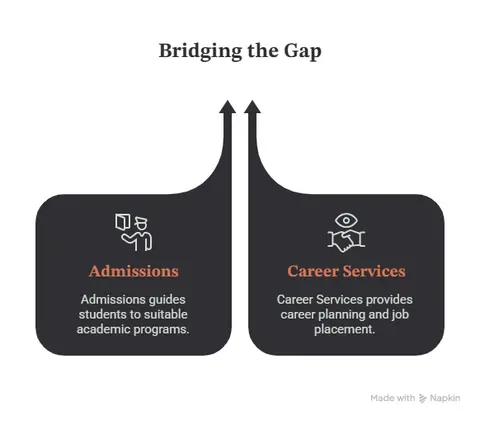
Yet one barrier remains largely intact: the institutional wall between admissions and career services.
At a time when students and families increasingly evaluate colleges through the lens of outcomes, institutions continue to separate the office responsible for recruiting students from the office responsible for helping them launch successful careers. The admissions team tells the story of opportunity. Career services work helps make that opportunity real. So why would those offices operate independently of one another?
Wichita State University has taken a different, shared leadership approach. As associate vice provost for strategic enrollment initiatives, I lead initiatives that align recruitment, admissions and career services with enrollment goals—essentially bridging the student life cycle from the college selection process to applied learning opportunities and career outcomes. Creating this role allowed us to double down on our strength as a university in connecting students and employers, not just after they graduate but while they’re still in school.
While every institution need not replicate that reporting structure, Wichita State offers a key lesson for higher education leaders: When enrollment and career readiness become part of the same strategic conversation, students benefit.
Career Storytelling, Starting at the Campus Tour
Admissions offices are, in many ways, the storytellers of the university. Every day, admissions professionals stand before prospective students and families to answer a fundamental question: Why should I choose this institution? Historically, the answer often focused on campus life, academic reputation, facilities or traditions. Those factors still matter. As students and parents increasingly ask about what happens after graduation, the most compelling answers reside within career services.
Career centers have access to the stories that resonate most strongly with today’s families, from students securing internships and building professional networks to gaining hands-on experience and translating classroom learning into meaningful careers. Yet at many institutions, those stories remain disconnected from the recruitment process.
When admissions and career services work closely together, that changes.
At Wichita State, prospective students encounter career readiness not as a senior-year service but as part of the institution’s identity from their very first visit. Campus tours pass through the career center. Career staff engage with prospective students and families. Admitted students participate in events that connect them directly with employers, including interview opportunities and on-campus fairs before they even begin classes.
The message is clear: career development doesn’t start after enrollment. It starts before arrival on campus.
That approach reflects a broader reality facing higher education today. Career readiness is no longer simply a student success initiative. It is a strategic enrollment initiative (and as such, my official title doesn’t even need the word “career” in it).
Students and families want evidence that a college education will lead to meaningful opportunities. Institutions that can demonstrate clear pathways from classroom to career possess a powerful recruitment advantage.
Better Employment Outcomes as a Silo-Busting Benefit
The benefits of breaking down these silos between admissions and career services offices extend beyond recruitment.
Closer alignment creates stronger connections to employers and labor market needs. Career services professionals routinely hear what employers are seeking, where talent shortages exist and which skills are most in demand. Those insights can inform recruitment strategies, helping institutions attract students into programs aligned with workforce opportunities.
In Wichita State’s case, conversations with major employers have helped university leaders better understand regional workforce needs and strengthen connections between incoming students and potential employers. Instead of viewing career development as something that happens near graduation, the institution is creating pathways that begin at recruitment and continue throughout the student experience.
This kind of alignment is increasingly important as higher education faces demographic headwinds and growing public scrutiny about value and return on investment. Colleges cannot afford to treat enrollment, student success and career outcomes as separate conversations.
From a student’s perspective, there is no distinction between admissions, career services, advising, employer relations and experiential learning. Students experience a single journey. They want to know whether the institution can help them achieve their goals.
The organizational chart may divide responsibilities into separate departments. Students do not.
When institutions create too many handoffs between offices, opportunities are lost. Information gets trapped within departments. Relationships become transactional rather than developmental. Students may not encounter career services until late in their academic careers, long after critical opportunities to build networks, gain experience and clarify goals have passed.
By contrast, when career readiness is embedded throughout the student experience, students begin to see the connection between education and opportunity much earlier. They understand not only what they can study, but also how those studies connect to future possibilities.
Time to Inspect Department Divides
This is not an argument that every college should place career services under enrollment management. Organizational structures should reflect institutional missions, cultures and strengths.
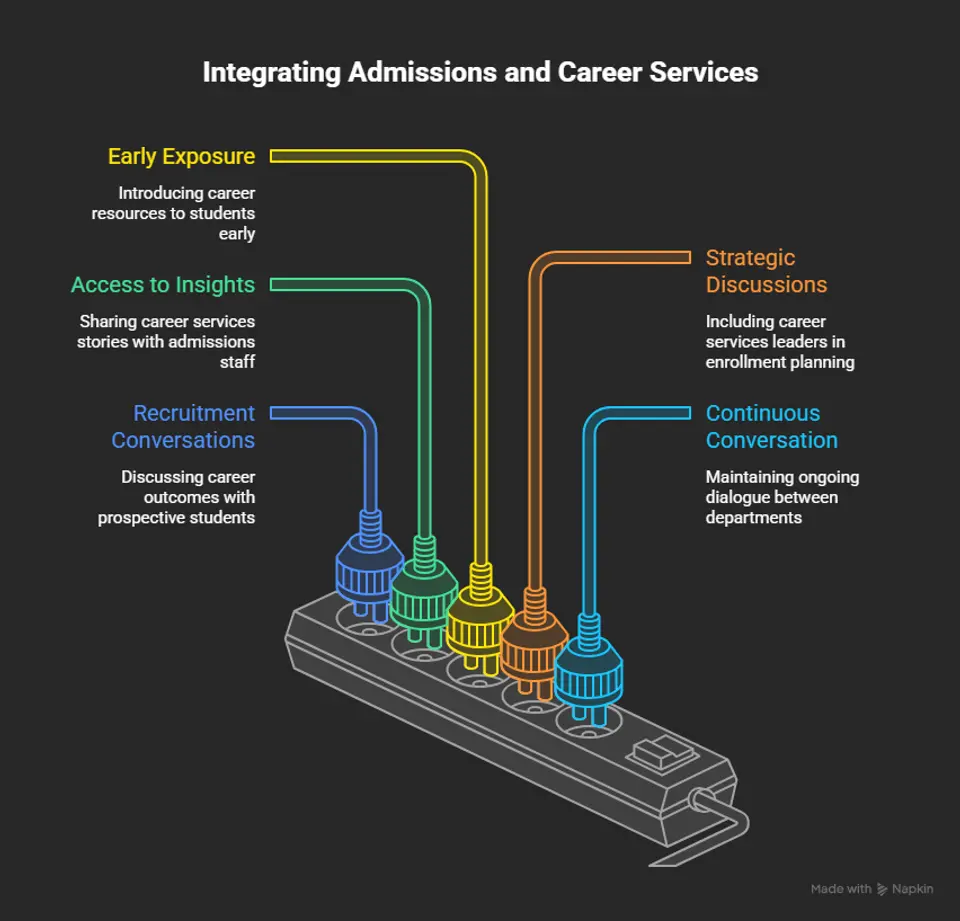
It is, however, an argument that every institution should examine whether the wall between admissions and career services still makes sense. Consider these questions:
-
Are career outcomes integrated into recruitment conversations?
-
Do admissions staff have access to the stories and insights generated through career services?
-
Are prospective students exposed to the institution’s career resources early enough to shape their decisions?
-
Do career services leaders have a seat at strategic enrollment discussions?
-
Is there continuous conversation between the admissions unit and the career unit?
If the answer to any of these is no, institutional leaders may be overlooking opportunities to better serve students. They are missing the beat on what students and families want today.
Ongoing efforts to embed career readiness into the curriculum remain essential in higher education. But the next challenge is embedding career readiness into institutional strategy.
The institutions that succeed will be those that recognize a simple truth: helping students build meaningful futures is not the responsibility of a single office, but rather a shared mission that should begin long before graduation—and perhaps even before enrollment.
The wall between admissions and career services is holding students back. It is time to start tearing it down.
Bobby Gandu has been Associate Vice Provost for Strategic Enrollment Initiatives at Wichita State University in Kansas since 2025 and an administrator at the university, his alma mater for both undergrad and graduate studies, for nearly 25 years.
Consensus Is Sort of Like True Love