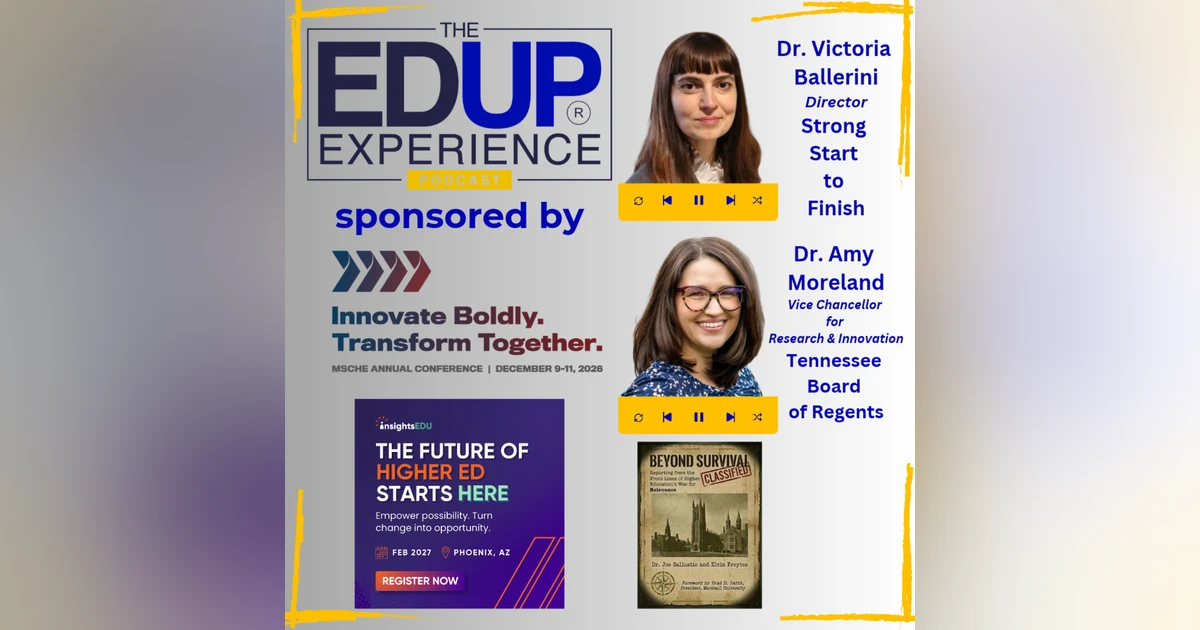
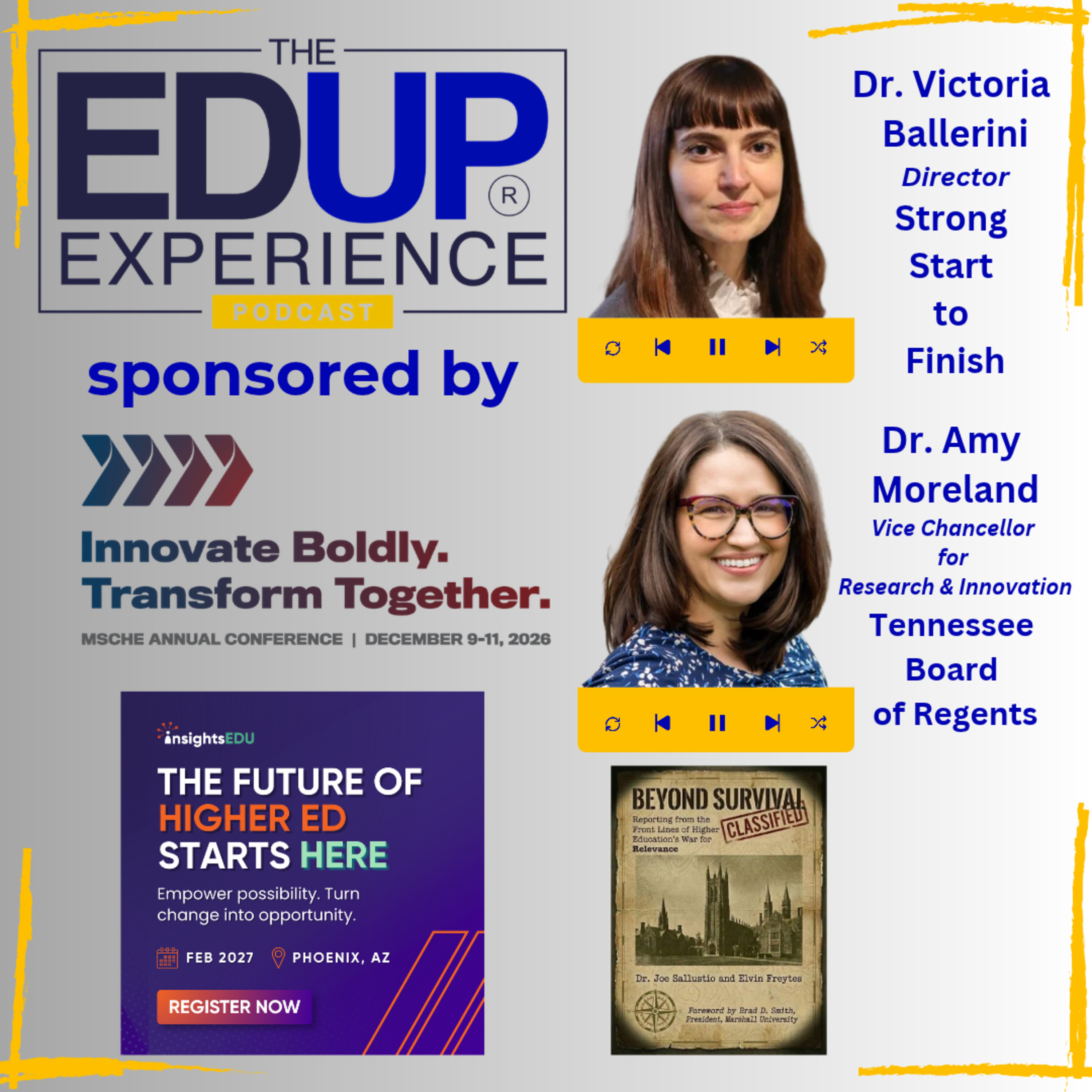
Why Are We Still Putting Students in Remedial Sequences That Don't Work? - Dr. Victoria Ballerini, Dir., Strong Start to Finish, & Dr. Amy Moreland, Vice Chancellor, Tennessee Board of Regents


 Apple Podcasts Apple Podcasts
  Spotify Spotify
  iHeartRadio iHeartRadio
  Youtube Music Youtube Music
  Audible Audible
  Amazon Music Amazon Music
  Pandora Pandora
  YouTube YouTube
  Overcast Overcast
  Castro Castro
  PocketCasts PocketCasts
  Castbox Castbox
  Podchaser Podchaser
  TuneIn TuneIn
  Deezer Deezer
  RadioPublic RadioPublic
  Podcast Addict Podcast Addict
  Anghami Anghami
  PlayerFM PlayerFM
  Goodpods Goodpods
  Audacy Audacy
  Castamatic Castamatic
  JioSaavn JioSaavn
  RSS Feed RSS Feed
 Key Takeaways
- Dr. Victoria Ballerini and Amy Moreland discuss how eliminating traditional prerequisite remedial courses in favor of just-in-time support can dramatically raise student passing rates from 20% to 70%.
- Placing students directly into gateway college-level courses with concurrent support produces the same successful outcomes as those seen in students who initially met strict placement standards.
- Integrating 'light the fire' courses directly into a student's program of study proves significantly more effective for retention than front-loading traditional general education requirements.
- Systemic reform across higher education requires institutions to rethink outdated developmental education models that often create barriers rather than pathways to student success.
It's YOUR time to #EdUp with Dr. Victoria Ballerini, Director, Strong Start to Finish, & Dr. Amy Moreland, Vice Chancellor for Research & Innovation, Tennessee Board of Regents
This episode is brought to you by Beyond Survival: Reporting from the Front Lines of Higher Education’s War for Relevance is a documentary account from the front lines of the most consequential upheaval in higher ed in generations!
This episode is sponsored by the MSCHE 2026 Annual Conference, where we will be podcasting live, keynoting, & facilitating a pre-conference workshop from December 9-11 in Philadelphia! Early-bird pricing ends October 12, 2026!
This episode is also sponsored by the InsightsEDU 2027 Conference - focused on attracting & retaining the modern learner - where we will be podcasting live from February 23-25 in Phoenix, AZ! Use code EDUP & save $100! Early-bird pricing ends December 15, 2026!
YOUR host is Dr. Joe Sallustio
- How does eliminating prerequisite remedial courses & offering just in time support raise passing rates from 20% to 70%?
- Why does placing students in gateway courses with support produce the same outcomes as students who met placement standards?
- What makes "light the fire" courses in a student's program of study more effective than front loading general education?
Listen in to #EdUp
Thank YOU so much for tuning in. Join us on the next episode for YOUR time to EdUp!
Connect with YOUR EdUp Team - Elvin Freytes & Dr. Joe Sallustio
● Join YOUR EdUp community at The EdUp Experience
We make education YOUR business!
P.S. Want access to the only intelligence platform built exclusively from presidential conversations in higher ed? Well, we have an app for that!
Join EdUp Leadership!
America's Leading Higher Education Podcast
America's Leading Higher Education Podcast Network
Frequently Asked Questions
Who are the guests on this episode of The EdUp Experience featuring Victoria Ballerini and Amy Moreland?
The episode features Dr. Victoria Ballerini, Director of Strong Start to Finish, and Dr. Amy Moreland, Vice Chancellor for Research & Innovation at the Tennessee Board of Regents.
How does just-in-time support improve student passing rates compared to traditional remediation?
By eliminating lengthy prerequisite remedial sequences and placing students directly into gateway courses with immediate support, institutions have seen passing rates soar from around 20% to 70%.
What is the benefit of 'light the fire' courses in higher education?
'Light the fire' courses engage students immediately within their chosen program of study, proving much more effective for engagement and persistence than front-loading general education requirements.


