Why Colleges Waste Space: Clarity, Direction, Incentives
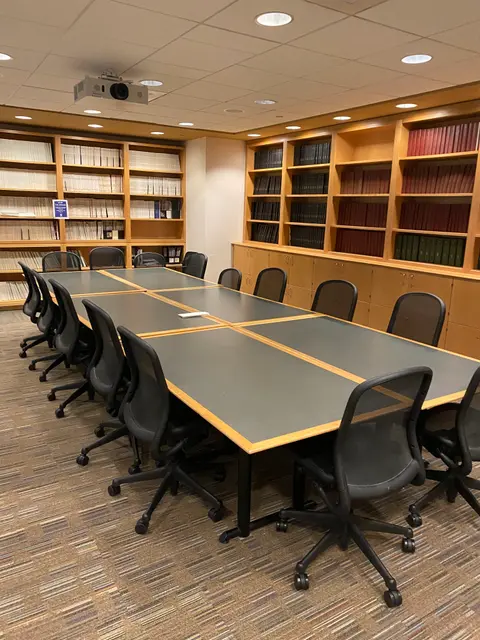
Colleges and universities continue to waste significant amounts of space, according to recently released results from the Inside Higher Ed/Hanover Research Survey of College and University Chief Business Officers.
The failure to optimize space at the portfolio level is commonly viewed as an intractable problem but the causes are straightforward. I would organize them into three categories: lack of clarity, lack of direction, and lack of incentives. These also serve as a usable framework for institutions interested in soul searching rather than ineffectual grousing.
Lack of Clarity
Many universities are not just large and decentralized, but the variation in goals and activities is unlike any other sector. That breadth is part of why these institutions have contributed so much but it also hinders efforts to manage space, as well as other resource types, by creating acute information asymmetry between decision makers and stakeholders.
The situation is often worsened by a paucity of data on space usage and impact, utility consumption, and facilities conditions. Institutions also tend to lack data on the needs of faculty, staff, students, and other community members that space can help to support. The quality of data that do exist is another possible area of improvement – I urge students in my research methods course for planning, designing, and operating the built environment to aim to create empirical evidence that is rigorous, independent, and actionable.
These challenges apply to efforts to understand current needs and wants. Gauging what will happen as institutions evolve adds another layer of mystery. Campus master planning is one tactic for increasing clarity, as well as direction, but such projects often generate lengthy documents that too few people read or stay dialed into and aren’t always as implementation-focused as they should be. Planning – which, full disclosure, is something I work with institutions on – is necessary but not sufficient.
Lack of Direction
This is partially a mindset issue. When space is not understood as a strategic asset – as a tool that can be deployed to shape how people experience the institution – it weakens the impetus to understand how it’s being used. There are leaders who understand space in this way, but that is different than this mindset being infused into planning, governance, and evaluation.
Even if we lower the bar and look for examples of goal setting outside the context of an overall strategy, disappointment often awaits. It’s not just when competing viewpoints are not resolved into a coherent set of priorities – it also happens when we generally agree. We often lack shared, specific concepts and indicators of popular ideas such as belonging, wellness, and collaboration. Next time you’re with a group of colleagues – have them write down their top three metrics for a concept you all generally agree on and see for yourself. Discordant goals make it hard to row in the same direction, and the cost is high in resource-constrained environments that put a premium on intentional investments.
Another culprit is a failure to embrace the importance of assigning, allocating, and scheduling space – of matching activities and people with existing environments. Effectiveness in these realms is often not emphasized to the extent it could be. Underperformance is the avoidable result.
Lack of Incentives
This starts at the top and touches every level of the institution. There doesn’t seem to be a lot coming out of boards, while presidents don’t get meaningfully assessed or rewarded for optimized space utilization. The glamor isn’t there, either, no ribbon cutting on a decision that saves 200,000 assignable square feet like there is when we spend $100 million to bring such a quantity online.
It’s not a mere lack of incentives nudging in the right direction, it’s that they sometimes point the other way. With the skirmishes and crises that are an ever-present and intensifying element of their tenure, presidents need to conserve political capital. Going to the mat to promote or support tough space allocation decisions that might rankle key supporters could come back to haunt them.
Things aren’t better the next level down. While space optimization might be boldly placed on job descriptions, I have not heard of any CFO, head of facilities, or planning pro who is going to be rewarded or dinged on a performance review for suboptimal space utilization outside of, at most, some glaring misstep. Meanwhile, even if deans and other unit heads are personally inclined to advocate for global space optimization, and some are, it’s hard for them to argue too robustly against their unit’s own interests. Space committees and budget models such as responsibility center management are meant to mitigate these forces but, for various reasons, they often do not.
Lack of clarity, direction, and incentive interact and mutually reinforce each other. Combined, for example, they result in the kind of principal-agent problem that your Econ 101 textbook warned you about.
Achieving Change
The details of achieving change vary somewhat by space type – last week’s article called out classroom space, for example, which is allocated in a way that provides unique opportunities – but the principles are consistent.
Neutralize
One route of change is to neutralize the forces hindering the requisite clarity, direction, and incentives. Institutions are trying this in various ways, including gathering occupancy data and measuring the productivity of research space. The trend towards more ongoing campus planning rather than, or as a complement to, a single report every five to 10 years seems promising given the nature of the beast.
Circumvent
Even if the fundamentals remain hostile to better space usage, there are ways to circumvent them, at least on a project basis or in a focused realm. The trick is to find a person or group that has the knowledge, the authority and budget, and the motivation to create a space that thrives. The result when these elements line up can provide an inspiration and a model that create momentum for more system change as well. During one master plan I worked on, stakeholders repeatedly referred to a certain building on campus as possessing a vibrancy they wanted to emulate. The building did have a nice design, in my opinion, but the secret was that there was a respected associate dean with the interest, influence, and inclination to make the space rock.
Invest
There’s underinvestment in the people and systems needed, centrally and in academic and administrative units, to properly plan, design, and operate space on campus. Given how much new construction, ongoing operations, and deferred maintenance cost and how integral decisions around them are to the mission of the school, any near-term budget savings of this tepid approach are swamped by long-term consequences.
Optimism
I’m optimistic about the prospects for change. Financial pressures are heightening. The instability of federal funding, even if it abates in the future, has spotlighted the importance of increasing fiscal self-sufficiency and risk diversification. Society in general thinks about space differently as post-pandemic trends in hybrid work settle in. Remote education persists and evolves such that even resident and commuter students have started replacing some classroom hours with online options. Experiential learning and virtual reality-based academic experiences are on the rise. All these increase the need and opportunity to think more actively about space.
In my first project after moving from university administration to the consulting side, keenly aware of the uphill battle strategic plans face once released, I wanted to challenge the client to follow through on the recommendations in the report. I noted that there was a clear path to change and that the open question was whether they would be able to sustain the organizational interest and momentum for change or whether inaction would prevail. I would challenge the entire sector now in similar terms. There’s momentum. But is there the will to meet the moment?

Chris Morett, PhD, MPP is a space planning and utilization consultant. He works with colleges and universities to achieve efficient and impactful physical footprints through planning and change management. He has worked with a range of institutions on space data analysis, utilization studies, building programming, campus master plans, and course scheduling optimization.
Chris was previously the Director of Academic Scheduling and Space Management at Rutgers University, where he also helped lead space and classroom benchmarking projects across Big Ten Academic Alliance schools.
He hosts the EdUp Campus Planning podcast and enjoys writing and speaking about space and facilities. Recent topics include how institutions can assess the impact of spaces through post-occupancy evaluations and other approaches, technology procurement and implementation, the impact of VR and other digital technologies on capital planning, and how to establish shared office space among staff and faculty to improve individual and collective outcomes.
The Wall Between Admissions and Career Services Is Holding Students Back