Teaching the Humans Who Teach the Humans
Teaching the Humans Who Teach the Humans
By: Dr. Freda Barnett-Braddock
As schools and colleges prepare for a new academic year, conversations about education once again center on student achievement. We debate instructional strategies, examine assessment data, explore the promise of artificial intelligence and search for new ways to improve learning outcomes. Those conversations matter. Students deserve our best.
But one question rarely receives the same attention: Who is teaching the humans who teach the humans?
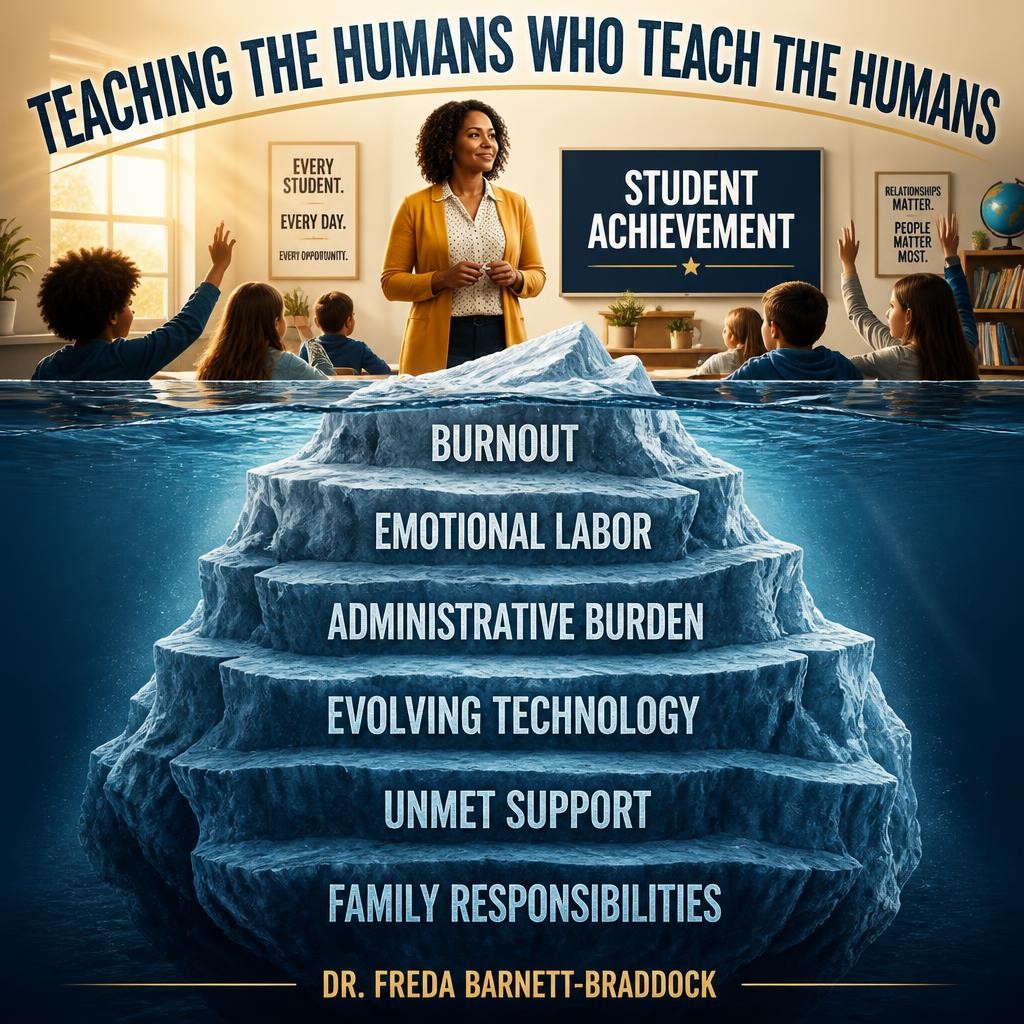
Throughout my years as an elementary and high school teacher, I watched remarkable educators pour everything they had into their students while quietly carrying heavy professional and personal demands. They often walked into the classroom feeling defeated, weary, and depleted, but they showed up anyway, because their students were counting on them. Those moments convinced me that if we truly want students to thrive, we must first ensure the people teaching them have the support they need to succeed.
Behind every classroom, whether in person or online, is an educator whose responsibilities extend well beyond instruction. Today's educators are teachers, mentors, advisers, problem-solvers and advocates. They manage changing expectations, new technologies, increasing accountability and the daily responsibility of helping students navigate challenges that often extend far beyond academics.
If we expect students to succeed, we must also invest in the people responsible for helping them get there.
One of the most pressing challenges facing education today is educator burnout. The latest RAND State of the American Teacher Survey found that teachers continue to report higher levels of job-related stress than many other working adults. Yet burnout is too often viewed as an individual problem instead of a systemwide challenge.
Most educators balance demanding workloads with family responsibilities, professional expectations and the emotional investment that comes from caring deeply about their students. Dedication can carry someone only so far. Even the most committed educators need support, resources and time to do their work well.
That support includes meaningful opportunities to continue learning.
One of the biggest misconceptions about education is that learning ends when someone becomes the teacher. In reality, the strongest educators remain lifelong learners because the profession continues to evolve. New instructional approaches, changing student needs and emerging technologies require educators to grow alongside the students they serve.
Professional development should not feel like another obligation added to an already full schedule. Research has found that the most effective professional learning is ongoing, collaborative and connected to educators' daily practice. It should provide practical strategies educators can apply immediately, encourage collaboration and create opportunities to learn from colleagues. Investing in educators' growth strengthens learning for every student they teach.
Artificial intelligence has quickly become one of the defining conversations in education. As someone who regularly speaks and writes about AI in education, I believe these tools have tremendous potential when used thoughtfully and responsibly.
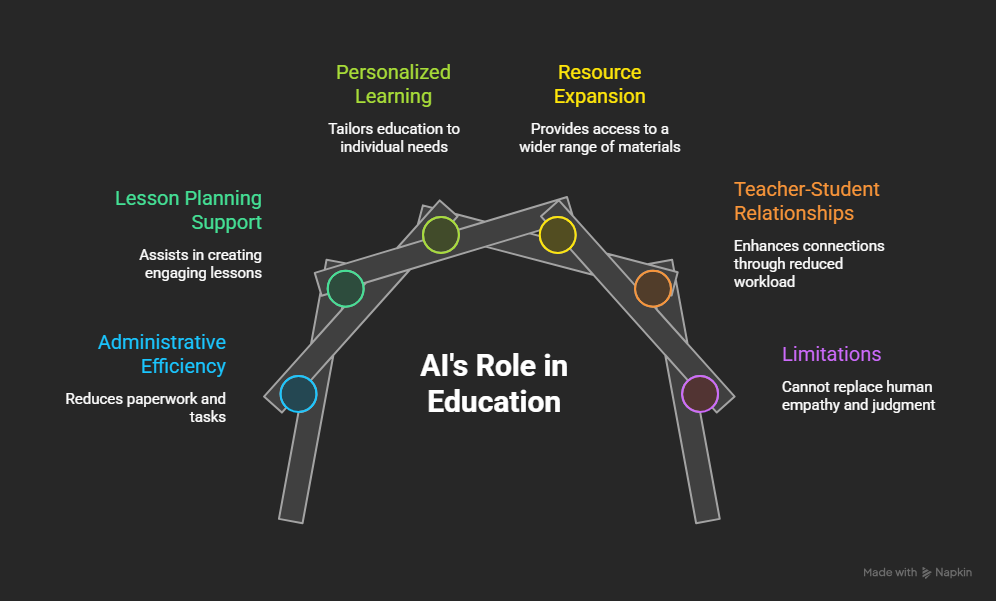
AI can reduce administrative work, support lesson planning, personalize learning and expand access to educational resources. Those are meaningful advantages, particularly at a time when educators are being asked to do more with limited time and resources.
Decades of education research have shown that strong teacher-student relationships are among the most important contributors to student engagement and learning. AI can strengthen those relationships by reducing administrative burdens and giving educators more time to focus on their students. What it cannot do is recognize when a student who once participated enthusiastically suddenly becomes withdrawn. It cannot encourage a struggling learner at exactly the right moment. And it cannot replace the judgment, empathy and human connection that define exceptional teaching.
Technology should strengthen the work educators do, not diminish the human relationships that make learning meaningful.
Educator well-being deserves the same level of attention.
Research consistently shows that educator well-being contributes to healthier learning environments, stronger student engagement and better outcomes. Supporting educators is not simply about reducing stress. It is about creating workplaces where people can do their best work over the long term.
That responsibility rests with educational leaders.
Leadership has never been defined by a title. It is reflected in the decisions leaders make every day. As educational leadership scholar Michael Fullan has argued, lasting school improvement depends on developing people, not simply implementing new initiatives. Strong leaders build trust, remove unnecessary barriers, encourage innovation and create opportunities for educators to succeed. They understand that meaningful change begins by investing in educators, because when educators have the support to grow and thrive, students benefit as well.
As another school year begins, student success and educator success should not be viewed as separate priorities. They are inseparable.
Supporting educator well-being is an investment in students.
Providing meaningful professional learning is an investment in students.
Using artificial intelligence responsibly while preserving the relationships at the heart of education is an investment in students.
Every conversation about improving education eventually comes back to one fundamental truth. Before we can fully support the learners in our classrooms, we must also support the people who teach them.
The future of education will always depend on the humans who teach the humans.
Dr. Freda Barnett-Braddock is dean of the College of Education and assistant provost at Columbia Southern University. With more than 25 years of experience in K-12 and higher education, she writes and speaks on educator leadership, professional learning, artificial intelligence in education, and student success.
Why Colleges Waste Space: Clarity, Direction, Incentives