Behind the Scenes of Academic Operations: Insights from the 2026 AcOps Conference

Welcome back to EdUp Editorials! If you tuned into our latest live event, you know we took a deep dive into the complex, fascinating, and often invisible world of university administration. Today, we are expanding on that conversation by unpacking the major themes, breakthrough ideas, and transformative technologies discussed at the 2026 AcOps Conference. If you have ever wondered how a university manages to schedule thousands of classes, assign classrooms, process grade changes, and keep registration running smoothly without total chaos, you are in the right place.
Academic operations professionals—registrars, academic planners, curriculum coordinators, and operations specialists—are the true unsung heroes of higher education. While faculty deliver lectures and students study for exams, the academic operations team builds the invisible scaffolding that makes the entire institution function. At the 2026 AcOps Conference, the energy was palpable. Professionals from across the country gathered to discuss how modernization, automation, and data-driven strategies are reshaping the future of campus administration. Let us break down the key insights from the event and explore what they mean for the future of higher education.
Key Takeaways from the 2026 AcOps Conference
The 2026 AcOps Conference was a watershed moment for higher education administration. For years, universities have lagged behind the corporate sector in adopting agile, modern operational frameworks. However, this year’s sessions made it clear that the tide is finally turning. The overarching theme of the conference was moving from reactive problem-solving to proactive, strategic planning.
Attendees engaged in intensive workshops, keynote panels, and tech demonstrations focused on interoperability, student-centric design, and data transparency. One of the most talked-about sessions focused on breaking down institutional silos. Too often, the registrar's office operates in a bubble, disconnected from financial aid, academic advising, and facilities management. The consensus at AcOps 2026 was clear: modern academic operations require a unified ecosystem where data flows freely across departments. By tearing down these traditional barriers, universities can respond to student needs faster and allocate resources more efficiently than ever before.
Modernizing Campus Scheduling and Academic Planning
If there is one area of university administration that causes the most late-night headaches, it is campus scheduling. Crafting the master schedule for an entire university is like solving a multidimensional puzzle with thousands of moving pieces. You have to balance faculty preferences, room capacities, course prerequisites, and student demand, all while ensuring compliance with institutional policies and accreditation standards.
Historically, this process relied heavily on legacy software, spreadsheets, and institutional memory—meaning if a seasoned registrar retired, decades of unwritten scheduling wisdom went with them. The 2026 AcOps Conference showcased a massive shift toward advanced, AI-driven scheduling platforms. These modern systems use predictive analytics to forecast student demand accurately, ensuring that popular courses have enough sections and rooms to accommodate everyone.
Furthermore, intelligent scheduling tools optimize room utilization. Many universities struggle with space crunches, believing they need to build new facilities when, in reality, their existing classrooms are sitting empty half the day due to poor scheduling practices. By leveraging dynamic room-assignment algorithms, institutions can maximize their physical footprints, saving millions of dollars in capital expenditures while reducing the carbon footprint of heating and cooling underutilized buildings.
The Shift to Dynamic Curriculum Mapping
Beyond classroom scheduling, academic planning has undergone a radical transformation. Traditional curriculum mapping was a static, paper-heavy process that happened every few years during accreditation cycles. Today, academic planners are utilizing dynamic curriculum management systems that allow departments to propose, review, and approve course modifications in real time. This agility ensures that course catalogs reflect current industry trends, technological advancements, and workforce demands, keeping the institution relevant and competitive in a rapidly changing educational landscape.
Streamlining Workflows for Institutional Agility
Institutional agility is a buzzword that gets thrown around a lot in higher education, but what does it actually mean? At its core, institutional agility is the ability of a university to adapt quickly to changing internal and external conditions—whether that means pivoting to remote learning, launching an innovative interdisciplinary degree program, or scaling up student support services in response to a crisis.
Unfortunately, many universities are bogged down by bureaucratic red tape and manual, paper-based workflows. A simple request for a course substitution or a major change might have to pass through five different paper forms and three physical signatures before it is processed. This sluggishness frustrates students and burns out staff.
At AcOps 2026, workflow automation was a major focal point. Leaders discussed the implementation of low-code and no-code platforms that allow administrative staff to build custom digital workflows without needing an army of software developers. By digitizing and automating routine approvals, universities can cut processing times from weeks to mere minutes. This not only lightens the administrative burden on overworked staff but also dramatically improves the student experience, allowing learners to focus on their studies rather than fighting administrative friction.
Direct Impacts on Student Success and Retention
It is easy to view academic operations as purely mechanical—numbers on a spreadsheet, room assignments, and policy enforcement. However, there is a direct, undeniable link between efficient academic operations and student success and retention.
Consider what happens when a student cannot register for a required prerequisite course because the section is full and the university failed to anticipate the demand. That student’s graduation timeline is instantly delayed by a semester or even a year. For many students, an extra semester of tuition, housing, and living expenses is the tipping point that forces them to drop out entirely. Conversely, when academic operations are running smoothly, course availability aligns with student needs, degree pathways are crystal clear, and administrative roadblocks are minimized.
Data-Driven Intervention
Modern academic operations platforms integrate deeply with student success analytics. Registrars and operational specialists are no longer just keeping the lights on; they are actively identifying at-risk patterns. For instance, if data shows that students who fail a specific introductory course in their first semester are statistically unlikely to graduate, operations teams can work with academic departments to restructure that course, add supplemental instruction, or expand tutoring availability before retention rates plummet. By viewing operations through a student-centric lens, universities can turn administrative data into a powerful tool for equity, inclusion, and student retention.
Overcoming Common Operational Bottlenecks in Higher Education
Despite the exciting innovations showcased at the 2026 AcOps Conference, nobody is pretending that modernizing academic operations is easy. Higher education is notoriously resistant to change, and campus administrators face significant hurdles when trying to implement new technologies and processes.
One of the most persistent bottlenecks is cultural resistance. Faculty and long-serving staff are often comfortable with legacy systems and traditional ways of doing things. Introducing a new scheduling tool or automated workflow can trigger anxiety and pushback. During a panel discussion at AcOps, change management emerged as a critical competency for modern operations leaders. Technology implementation is only thirty percent about the software itself; the other seventy percent is about people, communication, and training.
Another major bottleneck is budget constraints and fragmented funding. Higher education funding models are tight, and investing in enterprise software requires a compelling return on investment. Operations leaders must learn to speak the language of institutional finance, demonstrating how investments in operational efficiency ultimately protect tuition revenue by improving student retention and reducing administrative overhead.
Addressing Technical Debt
Technical debt is another silent killer of academic agility. Many universities are running their critical operations on cobbled-together legacy systems that are decades old. These systems do not talk to modern cloud-based applications, forcing staff to manually export and import data via CSV files—a process fraught with human error. Untangling this web of technical debt requires strategic, phased migration plans that do not disrupt ongoing term operations. It is akin to performing open-heart surgery while running a marathon, but as the conference emphasized, it is a necessary procedure for institutions that want to survive the next decade.
Looking Ahead: The Future of Academic Operations
As we wrapped up our coverage of the 2026 AcOps Conference, one thing became abundantly clear: academic operations are moving from the back office to the forefront of strategic institutional planning. Presidents, provosts, and boards of trustees are finally recognizing that you cannot execute a visionary strategic plan if your operational foundation is crumbling.
Looking ahead, we can expect to see deeper integration of artificial intelligence, machine learning, and predictive modeling into everyday campus administration. We will see more hyper-personalized student journeys, where degree pathways adapt dynamically to individual learning styles and career goals. We will also see a continued push toward remote and hybrid operational agility, ensuring that universities remain resilient in the face of unforeseen global challenges.
For those working in academic operations, this is an incredibly exciting, if demanding, time to be in the field. You are no longer just processing forms; you are engineering the modern university experience. Thank you for joining us on this deep dive. Make sure to subscribe to the podcast, leave a review, and share this blog post with your colleagues in administration, faculty leadership, and campus planning. Until next time, keep innovating and keep putting your students first!
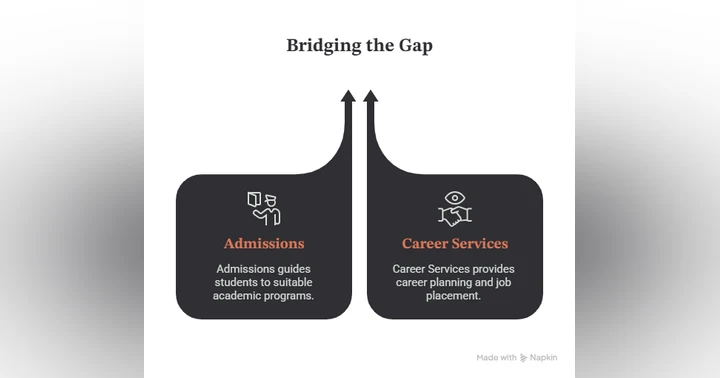
The Wall Between Admissions and Career Services Is Holding Students Back