If AI Makes Learning More Lonely, We're Doing It Wrong.
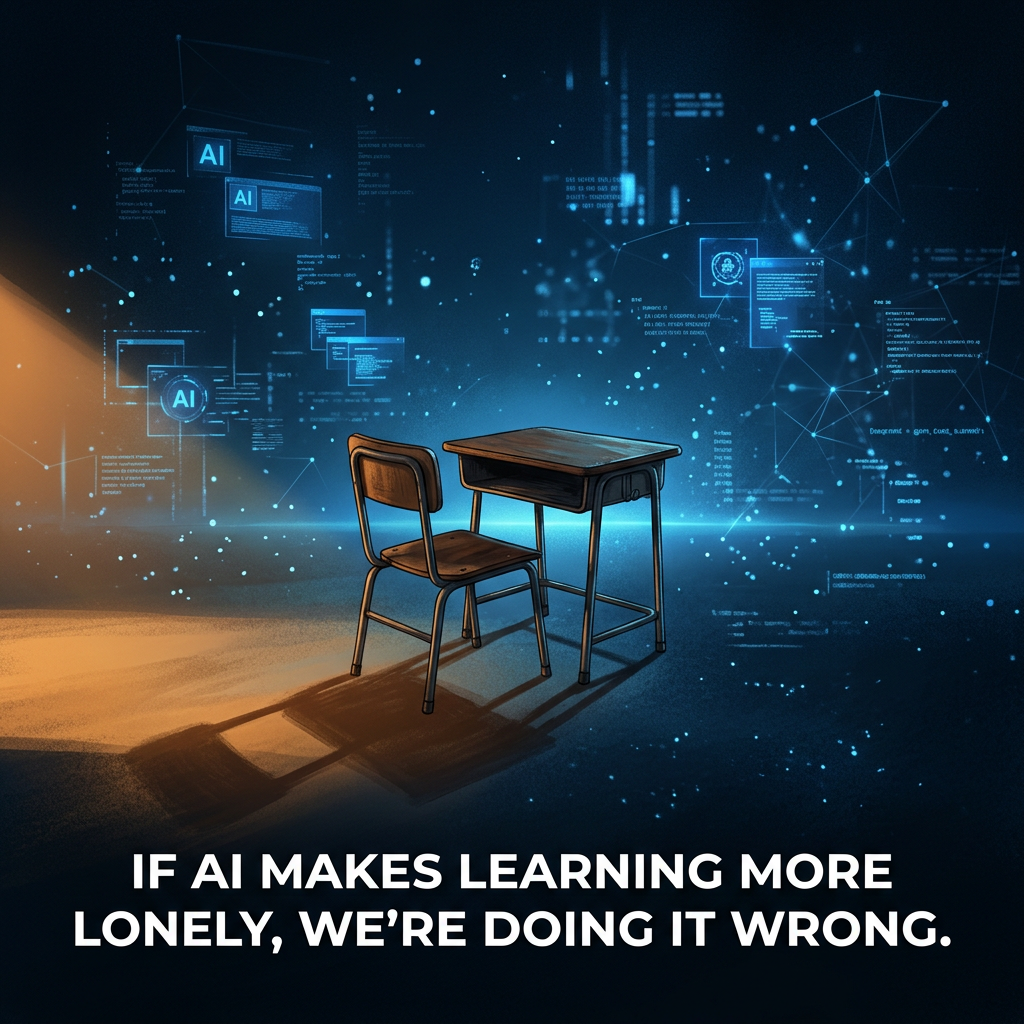
If AI Makes Learning More Lonely, We're Doing It Wrong.
It should bother more people that edtech has been so ineffective at improving either K-12 or higher education. It’s not because the technology was or is bad. It's because we keep pressing on the wrong lever.
For the last couple of decades, edtech leaders have been obsessed with personalization. Adaptive learning can figure out what you know and don't know and create a custom journey to some agreed-upon goal. That makes so much sense, but it misses something fundamental about how people actually learn.
We are hardwired to learn with and from other people. That's not a soft claim; there’s a mountain of research from neuroscience, developmental psychology, evolutionary anthropology, and cognitive science behind it. The seminar where someone’s misunderstanding reshapes how you see the problem. The way you work harder sometimes to compete with or impress someone else in the group. The professor who models how to attack a question you've never seen before. That's social learning, and it's where most of the real growth happens.
The edtech sector continues to optimize the solo journey at the expense of the communal one. More adaptive, more personalized, and more isolating. And then we all stand around wondering why outcomes don’t move.
AI has the potential to make this much worse if we deploy it the way we've been doing everything else. Learning will get that much more adaptive and that much less social. Students will spend less time with colleagues and faculty and more time alone with a chatbot that's good at meeting them where they are, but can’t throw a football with them while doing so.
The correct path forward can be seen in some earlier efforts. New Classrooms, for example, has achieved great gains for middle schools through a sophisticated (and logistically challenging) daily reshuffling of classes into small groups of students and teachers.
Whether it's an online classroom or a physical one, I’m not sure there’s an important place for technology. I see people collaborating, persuading, and communing. Where AI earns its place is everything around that room. The prep before class. The practice after. The reinforcement that locks in what you just learned. Students often do that work alone anyway, and many don't do it efficiently. Tech can make those solo hours more interactive and effective, so that when students walk into the room (virtual or physical), they're actually ready to engage.
Some will argue that many schools and universities aren’t that personal right now, and that I’m conjuring up a social utopia that does not exist even in the least tech-enabled schools. While every school could be better, most alumni remember their relationships there a lot better than they remember any particular subject. And if AI can transform the parts of learning that were already solitary, it can make the communal parts richer.
So our design principle is not "how do we use AI in the classroom?", but rather "how do we use AI to flank the classroom?” The question isn't "which AI tool should we buy?" It's "how do we use AI to make learning here more collaborative.
One more note: anyone who tells you they have the right answer about AI in education is going to look like a fool in either a week or a year. We are living through an invention-of-fire level of disruption. The honest posture for the next few years is experimentation, not certainty. Try things. Measure them. Be willing to be wrong. And above all, keep asking whether what you're building is bringing students together or pulling them further apart.
Because if AI makes learning more lonely, we're doing it wrong.

John Katzman is the founder and CEO of Noodle. Prior to getting it right, he founded and ran 2U, which is also involved in online learning, and The Princeton Review, which helps students find, get into, and pay for higher ed.
Katzman is the co-author of five books and has served as a director of several for- and non-profits, including Carnegie Learning, Renaissance Learning, the National Association of Independent Schools, the Institute for Citizens and Scholars, and the National Alliance of Public Charter Schools.
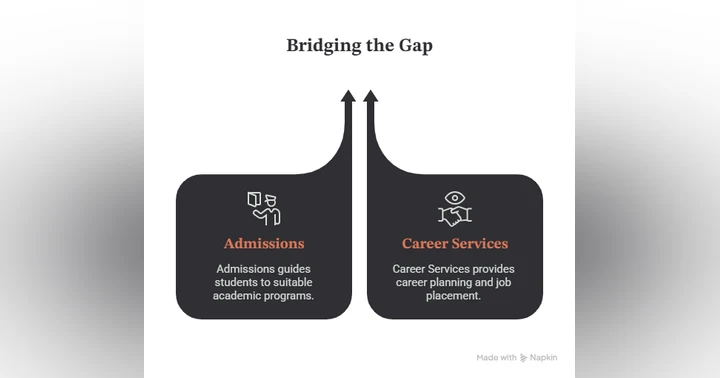
The Wall Between Admissions and Career Services Is Holding Students Back