The 'ANDers' Revolution: Redefining the Modern Student
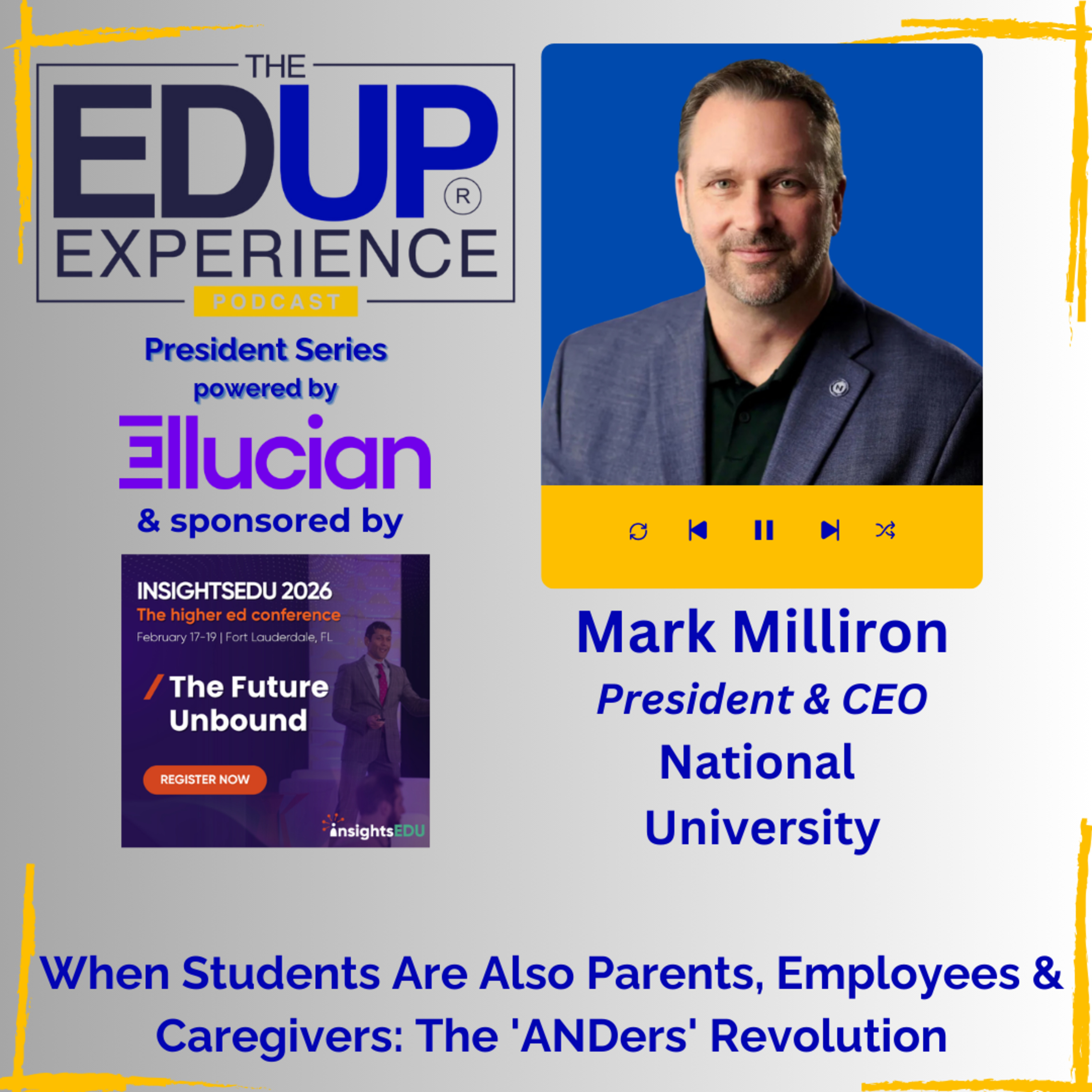
In today's rapidly changing world, the landscape of higher education is undergoing a dramatic transformation. The traditional image of a college student – a young, full-time learner without significant external responsibilities – is becoming increasingly outdated. A new breed of student is emerging, one who juggles multiple roles and responsibilities: the 'ANDer'. These students are parents and employees, caregivers and learners, often navigating complex lives while striving to achieve their educational goals. This blog post delves into the rise of the 'ANDers' and how institutions like National University are adapting to their unique needs, challenging traditional higher education models in the process. This post expands upon the recent EdUp Experience episode, When Students Are Also Parents, Employees & Caregivers: The 'ANDers' Revolution - with Mark Milliron, President & CEO, National University. In this episode, we explored the challenges and opportunities presented by this growing demographic and how innovative approaches are crucial for their success. Let's dive in and explore this revolution in education.
The Rise of the 'ANDers'
The traditional model of higher education, built around the assumption of a full-time, residential student, no longer reflects the reality for a significant portion of today's learners. Factors such as rising tuition costs, economic pressures, and evolving family structures have contributed to the rise of the 'ANDers'. These students are not just pursuing a degree; they are simultaneously managing work, family, and other commitments. They are often older, more diverse, and possess a wealth of life experiences that enrich the learning environment.
The increasing prevalence of 'ANDers' is not merely a demographic shift; it represents a fundamental change in the way people approach education. For many, higher education is no longer a linear path taken immediately after high school. Instead, it is a lifelong pursuit, a tool for career advancement, personal growth, and economic mobility. The 'ANDers' understand this and are actively seeking educational opportunities that fit into their complex lives.
However, the traditional higher education system often fails to adequately support these students. Rigid schedules, limited online options, and a lack of resources for working parents and caregivers can create significant barriers to success. This disconnect between the needs of the 'ANDers' and the offerings of traditional institutions is what necessitates a revolution in education, one that prioritizes flexibility, accessibility, and support.
Who are the 'ANDers'?
Defining the 'ANDers' requires a shift in perspective from the traditional student archetype. They are not defined by age or academic background, but rather by the multiple roles they juggle simultaneously. An 'ANDer' might be a single parent working full-time while attending classes in the evening. They could be a military veteran balancing service obligations with pursuing a degree. Or they might be a caregiver for an elderly parent while also working towards a career change.
The common thread that unites the 'ANDers' is their resilience, determination, and the need for flexible educational pathways. They are highly motivated individuals who recognize the value of education but face unique challenges in accessing and completing their degrees. These challenges can include:
- Time Constraints: Balancing work, family, and studies leaves little room for traditional full-time enrollment.
- Financial Burdens: Many 'ANDers' are financially independent and responsible for their own expenses, making tuition and living costs a significant barrier.
- Childcare and Caregiving Responsibilities: Finding affordable and reliable childcare or eldercare can be a major hurdle for 'ANDers'.
- Lack of Support: Traditional institutions often lack the resources and support services tailored to the needs of working adults and parents.
- Skills Gap: Some 'ANDers' may need to update their skills or acquire new ones to meet the demands of the modern workforce.
Understanding these challenges is crucial for institutions seeking to serve the 'ANDers' effectively. It requires a commitment to creating inclusive and supportive learning environments that address the specific needs of this growing student population.
National University's Approach to Serving 'ANDers'
National University (NU) has emerged as a leader in serving the 'ANDers' by designing its entire educational model around their unique needs. With a focus on flexibility, accessibility, and student support, NU offers a range of programs and services tailored to working adults, parents, and other non-traditional students.
One of the key features of NU's approach is its commitment to personalized learning. Recognizing that each 'ANDer' has a unique background and set of goals, NU provides individualized academic advising and support services to help students create a pathway to success. This includes:
- Flexible Scheduling: NU offers courses online and in person, with multiple start dates throughout the year, allowing students to enroll and progress at their own pace.
- Accelerated Programs: Students can complete their degrees faster through accelerated programs that condense coursework into shorter timeframes.
- Credit for Prior Learning: NU recognizes and awards credit for prior learning experiences, such as military training, professional certifications, and work experience, reducing the time and cost of earning a degree.
- Student Support Services: NU provides a comprehensive range of support services, including tutoring, career counseling, financial aid assistance, and childcare resources, to help students overcome obstacles and achieve their goals.
By prioritizing flexibility, personalization, and support, NU is creating a model of higher education that is truly accessible and responsive to the needs of the 'ANDers'. This approach is not only benefiting students but also contributing to a more diverse and skilled workforce.
Flexible Pathways for Non-Traditional Students
The concept of flexible pathways is central to serving the 'ANDers'. Traditional higher education often assumes a linear progression – high school to college to career. However, the reality for many 'ANDers' is far more complex and often involves detours, interruptions, and multiple transitions. Flexible pathways acknowledge this reality and provide students with multiple entry points, exit points, and options for navigating their educational journey.
Some key elements of flexible pathways include:
- Stackable Credentials: Breaking down degree programs into smaller, more manageable credentials, such as certificates and micro-credentials, allows students to gain valuable skills and knowledge along the way, even if they cannot immediately complete a full degree.
- Competency-Based Education: Focusing on demonstrating mastery of specific skills and knowledge, rather than simply accumulating credit hours, allows students to progress at their own pace and receive credit for what they already know.
- Prior Learning Assessment: Recognizing and awarding credit for prior learning experiences, such as work experience, military training, and independent study, reduces the time and cost of earning a degree.
- Open Educational Resources: Utilizing free and openly licensed educational materials reduces the financial burden on students and promotes access to quality learning resources.
- Online and Hybrid Learning Options: Providing a range of online and hybrid learning options allows students to balance their studies with other commitments and access education from anywhere.
By implementing these strategies, institutions can create flexible pathways that empower 'ANDers' to pursue their educational goals on their own terms, regardless of their circumstances.
Workforce Training and Addressing the Skills Gap
The rise of the 'ANDers' is closely linked to the growing skills gap in the modern workforce. Many adults possess some college education but lack the specific skills and credentials needed to succeed in today's rapidly evolving job market. This skills gap not only hinders individual career prospects but also impacts the overall economy.
Institutions like National University are playing a crucial role in addressing the skills gap by providing workforce training programs that are aligned with industry needs. These programs focus on developing practical skills and knowledge that can be immediately applied in the workplace. Some key features of effective workforce training programs include:
- Industry Partnerships: Collaborating with employers to identify skills gaps and develop training programs that meet their specific needs.
- Hands-on Learning: Providing opportunities for students to gain practical experience through internships, apprenticeships, and project-based learning.
- Stackable Credentials: Offering a range of stackable credentials, such as certificates and micro-credentials, that allow students to gain specific skills and knowledge without committing to a full degree.
- Career Services: Providing career counseling, job placement assistance, and networking opportunities to help students find employment after completing their training.
By providing targeted workforce training programs, institutions can help 'ANDers' acquire the skills they need to advance their careers and contribute to a more competitive workforce.
Challenging Traditional Higher Education Models
The 'ANDers' revolution is forcing a critical examination of traditional higher education models. The assumption that students are primarily young, full-time learners no longer holds true for a significant portion of the student population. This necessitates a shift in mindset and a willingness to adapt to the evolving needs of the modern student.
Some of the key areas where traditional higher education models need to be challenged include:
- Flexibility: Moving away from rigid schedules and semester-based calendars to provide more flexible learning options, such as online courses, accelerated programs, and competency-based education.
- Accessibility: Reducing barriers to access, such as high tuition costs, limited financial aid, and a lack of support services for working adults and parents.
- Relevance: Ensuring that curriculum is aligned with industry needs and provides students with the skills and knowledge they need to succeed in the workforce.
- Support: Providing comprehensive support services, such as academic advising, career counseling, and childcare resources, to help students overcome obstacles and achieve their goals.
- Innovation: Embracing new technologies and pedagogical approaches to enhance the learning experience and improve student outcomes.
By challenging these traditional models, institutions can create a more inclusive and responsive higher education system that serves the needs of all students, including the 'ANDers'.
The Real Competition: Poverty and Lack of Opportunity
While institutions often focus on competing with each other for students, the real competition for the 'ANDers' is poverty and lack of opportunity. Many 'ANDers' face significant financial challenges, making it difficult to afford tuition, living expenses, and other essential needs. Additionally, they may lack access to the resources and support they need to succeed in higher education.
Addressing these challenges requires a collective effort from institutions, government agencies, and community organizations. Some key strategies for combating poverty and expanding opportunity for 'ANDers' include:
- Increasing Financial Aid: Providing more grant aid and scholarships to help low-income students afford tuition and other expenses.
- Expanding Access to Affordable Childcare: Providing subsidized childcare services to help parents balance their studies with their caregiving responsibilities.
- Offering Support Services: Providing comprehensive support services, such as food pantries, housing assistance, and transportation assistance, to help students meet their basic needs.
- Promoting Economic Mobility: Providing career counseling, job placement assistance, and financial literacy training to help students achieve economic self-sufficiency.
- Advocating for Policy Changes: Supporting policies that promote access to affordable education, healthcare, and childcare.
By addressing the root causes of poverty and expanding opportunity, we can create a more equitable society where all individuals, including the 'ANDers', have the chance to achieve their full potential.
The 'ANDers' Revolution in Education
The 'ANDers' revolution is not just a demographic shift; it is a call for a fundamental transformation in higher education. It is a call for institutions to prioritize flexibility, accessibility, relevance, and support in order to meet the needs of the modern student. It is a call for a more equitable and inclusive higher education system that empowers all individuals to pursue their educational goals and achieve their full potential.
This revolution requires a collaborative effort from institutions, faculty, staff, students, and policymakers. It requires a willingness to embrace new ideas, challenge traditional models, and prioritize the needs of the 'ANDers'. By working together, we can create a brighter future for all learners and build a more prosperous and equitable society.
In conclusion, the rise of the 'ANDers' represents a significant shift in the landscape of higher education. Institutions like National University are leading the way in adapting to their unique needs, offering flexible pathways, workforce training, and comprehensive support systems. However, the real competition lies in overcoming poverty and lack of opportunity. By challenging traditional models and embracing innovation, we can create a more inclusive and responsive education system that empowers all learners. If you want to delve deeper into this topic, be sure to listen to the full conversation with Mark Milliron, President & CEO of National University, on the EdUp Experience. You can also find more information in the show notes provided, and continue to learn how we can make education more accessible for all.

2025 Higher Education Trends - from ~100 College/University Presidents