Jan. 27, 2026
Why Elite Universities Should Invest in Vocational Training

Why Elite Universities Should Invest in Vocational Training
For decades, America’s education system has funneled prestige, resources, and aspiration into four-year colleges, while vocational training has been left underfunded and undervalued. Now, an unexpected model is emerging that could begin to correct that imbalance: having elite universities channel resources into trade schools and workforce training.
The so-called “Robinhood” approach—redirecting wealth from universities with multi-billion-dollar endowments to underfunded vocational programs—should not be seen as punishment. It is a corrective. Countries like Germany have long demonstrated that vocational education is not a fallback, but a cornerstone of economic vitality. By contrast, the U.S. has elevated the bachelor’s degree as the singular path to success, leaving too many students saddled with debt and disconnected from real employment opportunities.
As a professor of engineering technology at Fitchburg State University, I see firsthand how well vocational education can serve as a feeder into higher learning. Many of our students come from vocational schools, and they bring with them both practical skill and confidence. When that hands-on training is combined with theory, it produces graduates who are well-prepared for careers without the crushing financial burden that so often comes with traditional academic pathways. This blending of practice and theory is not only effective, it is sustainable.
That is why redirecting resources toward vocational education holds so much promise. It recognizes that workforce training is not a second-class option, but an essential pillar of economic competitiveness. With intentional partnerships between universities, community colleges, trade schools, and employers, the impact could be transformative.
Of course, there are challenges. Universities are not naturally attuned to market rhythms. They think in centuries, while industries think in quarters. But humility and collaboration can bridge this gap. If elite institutions approach this work seriously, they can help build durable pipelines of opportunity that align education with the needs of our economy.
The stakes are high. The future of America’s workforce will depend not on how many students enter the Ivy League, but on how many have access to affordable, high-quality, market-relevant education. Redirecting resources from the top of the system to strengthen its foundation is not only fair—it may be the smartest investment in higher education.

PROFESSOR - Engineering Technology
Dr. Sanjay Kaul is Professor of Engineering Technology at Fitchburg State University, Fitchburg, MA, and writer focused on globalization, technology and policy. He has held leadership roles in higher education and frequently writes on international economic and energy policy.
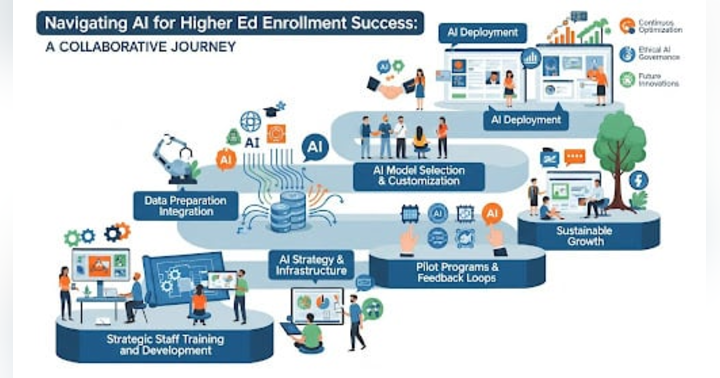
Navigating Automation’s Inevitability with a Human First Competitive Edge
Navigating Automation’s Inevitability with a Human First Competitive EdgeThe landscape of higher education enrollment is more competitive than ever. In this race for sustainable growth amid an ever-rising cost per enrollment, there is an und…

Beyond the Mic: How Podcasting Is Building New Bridges on Campus
Step into a university studio and you’ll hear more than just stories. You’ll hear a quiet revolution. Podcasting is changing how colleges connect—not only with students and alumni, but with their own sense of identity. Yet, for e…


