The Rise of Non-Degree Programs: How Business Schools Are Adapting

In today's rapidly evolving world, the landscape of business education is undergoing a significant transformation. Traditional degree programs are now sharing the stage with a surge of non-degree offerings. This shift presents both challenges and opportunities for business schools, testing organizations, and aspiring professionals alike. In this article, we'll delve into the increasing popularity of non-degree programs, how the Graduate Management Admission Council (GMAC) is navigating this change, and the implications for standardized testing and graduate management education.
This discussion complements the insights shared in one of our latest podcast episodes, How Is a 70 Year Old Testing Organization Reinventing Itself with AI & Why Should You Care? - with Joy Jones, CEO, Graduate Management Admission Council (GMAC), where we had the pleasure of speaking with Joy Jones, the CEO of GMAC, about these critical industry trends. We highly recommend listening to the full episode for a more in-depth understanding of the topics covered here.
Introduction: The Shifting Landscape of Business Education
For decades, the MBA and other graduate degrees have been the gold standard for individuals seeking to advance their careers in business. However, the business world is changing at an unprecedented pace, driven by technological advancements, globalization, and evolving workforce needs. This dynamic environment demands more flexible and accessible educational options. As a result, non-degree programs, such as executive education courses, specialized certificates, and online modules, are experiencing rapid growth. These programs offer professionals the opportunity to acquire specific skills and knowledge without committing to a full-time degree program.
This shift in educational preferences is not just a passing trend. It reflects a fundamental change in how individuals approach career development and lifelong learning. Professionals are increasingly seeking targeted, practical education that can be immediately applied to their current roles or help them transition to new opportunities. This demand has led business schools to re-evaluate their offerings and explore new ways to meet the evolving needs of their students and the business community.
The Rise of Non-Degree Programs in Business Schools
Several factors contribute to the growing popularity of non-degree programs in business schools. One of the primary drivers is the increasing need for specialized skills. As industries become more complex and technology-driven, professionals require specific expertise in areas such as data analytics, digital marketing, and cybersecurity. Non-degree programs provide a focused and efficient way to acquire these skills.
Another factor is the desire for flexibility and convenience. Many professionals are unable to commit to full-time degree programs due to work or family obligations. Non-degree programs, particularly those offered online or in a hybrid format, offer the flexibility to learn at their own pace and on their own schedule. This accessibility makes education more attainable for a wider range of individuals.
Additionally, non-degree programs often offer a more immediate return on investment. Unlike traditional degree programs, which can take several years to complete, non-degree programs typically last from a few weeks to several months. This allows professionals to quickly acquire new skills and knowledge and apply them to their jobs, leading to faster career advancement and increased earning potential.
GMAC's Response: Adapting to a Changing Market
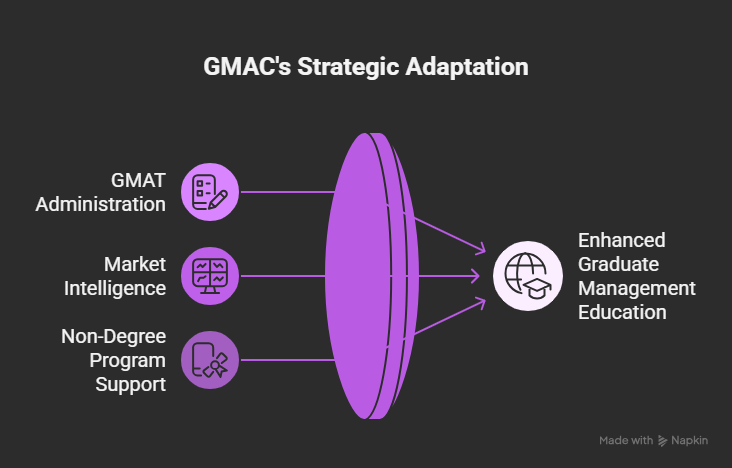
The Graduate Management Admission Council (GMAC) plays a critical role in the graduate management education ecosystem. As the administrator of the GMAT exam and a leading provider of market intelligence, GMAC has a unique perspective on the trends shaping the industry. Recognizing the rise of non-degree programs, GMAC has been actively adapting its strategies to remain relevant and support business schools in meeting the evolving needs of their students.
GMAC's response includes expanding its research and insights into the non-degree market, providing business schools with valuable data and analysis to inform their program development and marketing efforts. GMAC is also exploring new ways to support non-degree programs, such as developing assessments and credentials that recognize the skills and knowledge acquired through these programs.
In our podcast episode, Joy Jones emphasized GMAC's commitment to innovation and its focus on serving the needs of both business schools and students. She highlighted the importance of data-driven decision-making and the need for business schools to embrace new models of education to remain competitive in the changing market.
The Impact on Standardized Testing (GMAT)
The rise of non-degree programs has significant implications for standardized testing, particularly the GMAT exam. While the GMAT remains a critical component of the admissions process for many MBA programs, its role in non-degree programs is less clear. As more students opt for non-degree options, the demand for the GMAT may decline, potentially impacting GMAC's revenue and influence.
However, GMAC is actively addressing this challenge by exploring new ways to leverage its testing expertise and technology. This includes developing assessments that are tailored to the specific needs of non-degree programs and offering alternative testing options that are more convenient and accessible for students. GMAC is also working to demonstrate the value of the GMAT in predicting success in non-degree programs, highlighting its ability to assess critical thinking and problem-solving skills.
The Role of AI in GMAC's Reinvention
Artificial intelligence (AI) is playing an increasingly important role in GMAC's efforts to reinvent itself and adapt to the changing landscape of business education. GMAC is leveraging AI to improve its testing and assessment capabilities, personalize the student experience, and provide business schools with more data-driven insights.
For example, GMAC is using AI to develop more adaptive and engaging test formats, tailoring the difficulty of questions to each student's individual skill level. AI is also being used to analyze student performance data and provide personalized feedback and recommendations. Additionally, GMAC is using AI to identify emerging trends in the business education market and provide business schools with insights to inform their strategic decision-making.
During our discussion, Joy Jones spoke extensively about GMAC's investment in AI and its potential to transform the future of graduate management education. She emphasized the importance of using AI ethically and responsibly, ensuring that it enhances the student experience and promotes fairness and equity.
Partnerships with Employers and Customized Education
Another significant trend in business education is the increasing collaboration between business schools and employers. Companies are seeking to upskill and reskill their employees to meet the demands of the changing business environment, and business schools are responding by developing customized education programs that address the specific needs of individual organizations.
These partnerships often involve the creation of on-site or satellite campuses, where business schools deliver short, intensive training programs that are directly aligned with the company's strategic goals. These programs may cover a range of topics, from leadership development to technical skills training. By partnering directly with employers, business schools can ensure that their programs are relevant and practical, providing students with the skills and knowledge they need to succeed in the workplace.
This trend also presents opportunities for GMAC to play a role in assessing and validating the skills and knowledge acquired through these customized education programs. GMAC can work with business schools and employers to develop assessments that measure the effectiveness of these programs and provide students with credentials that are recognized and valued by the business community.
Maintaining Relevance in Graduate Management Education
As non-degree programs and customized education gain popularity, it is crucial for graduate management education to maintain its relevance and value proposition. Business schools must demonstrate the unique benefits of a graduate degree, such as the development of critical thinking skills, leadership abilities, and a comprehensive understanding of business principles.
To maintain relevance, business schools should focus on delivering high-quality programs that are aligned with the needs of the business community. This includes incorporating experiential learning opportunities, such as internships, consulting projects, and case studies, into the curriculum. Business schools should also embrace new technologies and pedagogical approaches, such as online learning, blended learning, and personalized learning, to enhance the student experience and improve learning outcomes.
Additionally, business schools should actively engage with employers to understand their evolving needs and ensure that their programs are preparing students for the jobs of the future. This includes seeking feedback from employers on the curriculum, offering opportunities for students to network with industry professionals, and partnering with companies to develop customized education programs.
Insights from Joy Jones, CEO of GMAC
Our conversation with Joy Jones, CEO of GMAC, provided valuable insights into the challenges and opportunities facing the graduate management education industry. Joy emphasized the importance of innovation, collaboration, and data-driven decision-making. She highlighted GMAC's commitment to serving the needs of both business schools and students and its efforts to adapt to the changing market.
Joy also spoke about the importance of diversity and inclusion in business education. She emphasized the need for business schools to create a welcoming and supportive environment for students from all backgrounds and to ensure that their programs are preparing students to lead diverse and inclusive organizations. She believes that by embracing diversity and inclusion, business schools can create a more equitable and sustainable future for the business community.
The Future of Business Education: A Hybrid Model?
Looking ahead, the future of business education is likely to involve a hybrid model that combines the best aspects of traditional degree programs, non-degree programs, and customized education. This model would offer students a range of options to meet their individual needs and career goals. Students could choose to pursue a full-time degree program, enroll in a specialized certificate program, or participate in a customized education program offered in partnership with their employer.
This hybrid model would require business schools to be flexible and adaptable, offering a range of programs and delivery methods to meet the diverse needs of their students. It would also require business schools to collaborate more closely with employers to ensure that their programs are aligned with the needs of the business community.
In this hybrid model, GMAC could play a valuable role in assessing and validating the skills and knowledge acquired through different types of programs. GMAC could develop assessments that are tailored to the specific needs of each program and provide students with credentials that are recognized and valued by employers.
Embracing Change and Innovation
The rise of non-degree programs is transforming the landscape of business education, presenting both challenges and opportunities for business schools, testing organizations, and aspiring professionals. To thrive in this changing environment, business schools must embrace innovation, adapt their programs to meet the evolving needs of their students, and collaborate closely with employers. Organizations like GMAC need to continue to evolve to offer value in this new environment.
By embracing change and innovation, business schools can ensure that they remain relevant and valuable in the years to come. We hope this blog post has provided you with a deeper understanding of the trends shaping the business education industry. Be sure to check out our related podcast episode, How Is a 70 Year Old Testing Organization Reinventing Itself with AI & Why Should You Care? - with Joy Jones, CEO, Graduate Management Admission Council (GMAC), for more insights and perspectives on this important topic. Thank you for reading!
Navigating Automation’s Inevitability with a Human First Competitive Edge